Written by:
Pius Patrick Akol (Trainer, Uwezo Uganda) and Mary Goretti Nakabugo, (Executive Director, Uwezo Uganda and Co-Principal Investigator, Action for Life Skills and Values in East Africa – ALiVE)
Introduction
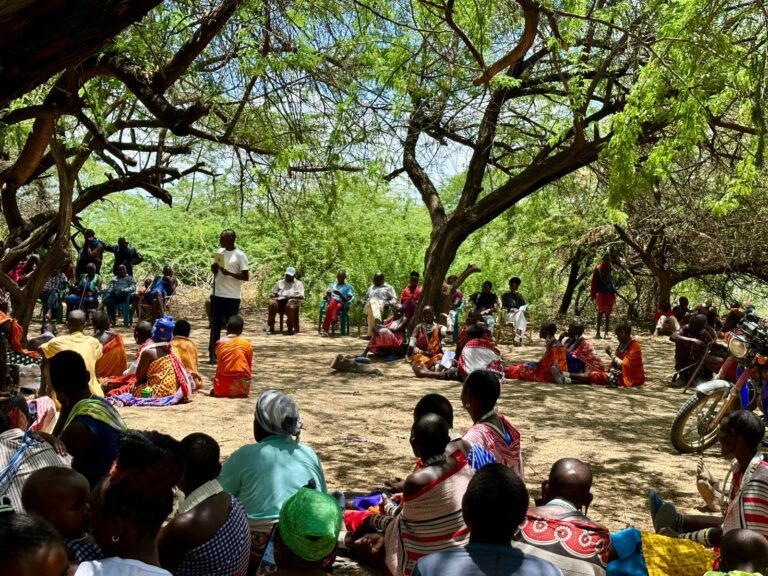
Imagine a generation of African children and young people equipped to tackle local challenges creatively. To realise this, Action for Life skills and Values in East Africa (ALiVE), an initiative of the Regional Education Learning Initiative Africa (RELI-Africa), launched a parental and community engagement drive designed to create awareness and enhance capacity of parents, guardians and other caregivers to intentionally and actively support the development of problem-solving skills in their children and youths. The drive contributes to ALiVE’s vision of an East Africa where all children are equipped with life skills and values, to support their learning, working, and living. The parental engagement drive that is taking place in Kenya, Mainland Tanzania, Uganda and Zanzibar during the course of May-July 2025 kicked-off in Uganda on 8th May 2025.
The Broader Context
There are many different understandings and application of life skills. In spite of this, The World Health Organisation (WHO) has described life skills as the abilities that empower individuals to effectively deal with the challenges of day-to-day life (WHO, 1999)[i]. Furthermore, in the Sustainable Development Goals (SDG) era and the 21st century, life skills are not just individual competencies but collective necessities for sustainable development. They bridge the education systems with real-world demands, empower vulnerable populations, and equip societies to tackle existential threats. As the World Bank asserts: “The skills needed in labour markets are multidimensional, so systems need to equip students with far more than just reading, writing, and math—but students cannot leapfrog these foundational skills unless they include additionally-higher-order cognitive skills such as problem-solving.” (World Bank, 2018)[ii].
Current Status of Life Skills Development in Uganda’s Education System
Uganda introduced a Competency-Based Curriculum (CBC) in 2020 – thus shifting the focus from traditional content-based approaches to a more skills-oriented framework (NDC, 2020)[iii]. The CBC emphasises competencies that prepare students for real-world challenges and aims to foster critical thinking, problem-solving abilities (inquisitive minds), and practical skills among learners, thereby enhancing their employability and adaptability in a rapidly changing job-market. The CBC is intended to address a persistent challenge of rote learning that dominates the education system.
ALiVE Parental Engagement Drive
The parental engagement drive of ALiVE intends to empower parents and communities to be able to guide children and young people to become independent thinkers and problem-solvers who can navigate challenges with confidence. The drive is implemented through a three-pronged approach. Firstly, parents, guardians and caregivers of children and adolescents aged 4-17 years will be; sensitised on the importance of problem-solving skills and, secondly, their capacity will be enhanced with practical tools and strategies for fostering problem-solving in children and adolescents. Thirdly, effort will be made to strengthen partnerships between families, schools and community organisations to create a supportive ecosystem for nurturing life skills.
The initiative acknowledges the parents’ unique role in cultural and community contexts because parents, guardians and caregivers in Africa and Uganda alike, cannot be delinked from the ecosystem of life skills development among children and young people. Acquisition of life skills like problem-solving can also generally be accepted to be a continuous process and that such avenues can be varied from school, homes and communities. To this end, the actors that influence these skills acquisition are normally those with whom such children and young people are closer to and interact with.
Homes and communities offer opportunity for all categories of children and young people who are either not enrolled, in or school dropouts. These opportunities would usually present in form of doing domestic chores, agriculture related work, as well as exposure to cultural practices e.g. communal storytelling – all of which offer interaction with adults who are a source of guidance and learning.
Why a Focus on Problem-Solving Skills?
The Global Context
Problem-solving skills are regarded as a cornerstone of employability in the 21st Century, where rapid technological advancements, automation, and shifting labour markets demand adaptability. According to The World Economic Forum, employers estimate that 44% of workers’ skills will be disrupted in the next five years and that cognitive skills are reported to be growing in importance most quickly, reflecting the increasing importance of complex problem-solving in the workplace (Future of Jobs Report, 2023)[iv] as this enables workers to troubleshoot Artificial Intelligence (AI) systems, optimise workflows, and innovate amid disruption. The Organisation for Economic Co-operation and Development (OECD)’s Programme for International Student Assessment (PISA) 2022 data reveals that nations prioritising problem-solving in education, such as Singapore and Estonia, exhibit higher youth employment rates and GDP growth[v]. Equipping individuals with these skills fosters resilience and prepares them for emerging industries like green tech and cybersecurity, ensuring they remain competitive in a dynamic global workforce.
In addition, entrepreneurship in the 21st century thrives on problem-solving, as innovators must address pressing challenges like climate change, healthcare access, and digital inequality. The Global Entrepreneurship Monitor (2023)[vi] reports that 78% of early-stage entrepreneurs globally prioritise social and environmental sustainability over profits, which usually will be driven by problem-solving competencies. Elsewhere, UNESCO’s Education for Sustainable Development framework (2021)[vii] links problem-solving to Sustainable Development Goal (SDG) targets like decent work (SDG 8) and industry innovation (SDG 9), positioning it as a catalyst for inclusive growth. By nurturing these problem-solving skills, nations unlock entrepreneurial potential, turning local challenges into global opportunities.
The Ugandan Context
ALiVE parental engagement drive to strengthen problem-solving skills contributes to Uganda’s Vision 2040[viii] which is primarily aimed at seeing Uganda become a middle-income country by 2040 through building a skilled and innovative society. Problem-solving is explicitly tied to the following Uganda Vision 2040’s pillars namely; human capital development, industrialisation, and climate resilience. By prioritising these skills, families not only secure their children’s futures but also fuel community-level progress, ensuring that Africa’s next generation drives sustainable development rather than enduring its disruptions.
Within the East African context, Uganda seems to lag behind her counterparts in as far as problem-solving skills are concerned. In 2022, ALiVE assessed life skills and values among adolescents aged 13-17 in 80 districts in East Africa, including 20 districts in Uganda. The findings of the assessment that reached over 45,000 adolescents aged 13-17 years revealed that many of the young people in East Africa had low proficiencies in the life skills and values assessed (problem-solving, self-awareness, collaboration, and the value of respect). In problem-solving, for example, on average, only 5% of the adolescents assessed across the four jurisdictions were found to be able to demonstrate full problem-solving proficiencies. In Uganda, only 3% of adolescents assessed demonstrated full problem-solving proficiencies compared to 5% in Kenya, 8% in Tanzania and 14% in Zanzibar (RELI 2023:29)[ix].
Overview of ALiVE Parental Engagement Drive
ALiVE parental engagement drive seeks to;
- Increase Awareness: Raise awareness among parents about the importance of life skills and values, commencing with the problem-solving skill
- Enhance Capacity: Equip parents with practical tools and strategies for fostering problem-solving in children
- Foster collaboration: Strengthen partnerships between families, schools and community organisations to create a supportive ecosystem for nurturing life skills and values.
In Uganda, the parental and community engagement initiative for life skills development and values among young people is being implemented in partnership with six district-based organisations[x] in six districts of Oyam, Kanungu, Mukono, Tororo, Kampala, and Sheema, representing different geographical regions and ensuring that both rural and urban locations are considered to understand all contexts. The primary target audiences include: parents, guardians, children and youths (in and out of school) caregivers, educators, community leaders, youth mentors, local policy makers, school leaders, religious leaders, and other leaders in the community.
Key Strategies for the Parental Engagement Drive
Even when the six partner organisations in Uganda are working in specific districts, their broader program activity coverage spreads over many other districts where the campaign gains will spill-over. The drive largely rides on the following strategies:
Stakeholder engagement: Collaborating with national and local government actors, schools, local CSOs, and local community leaders to gain support and resources; and conduct a baseline survey to understand existing knowledge, specific needs and challenges in nurturing life skills and values.
Capacity Enhancement: Training local facilitators/champions (including the as select network of ALiVE partners) to lead and facilitate workshops and community discussions; and develop partnerships with relevant community stakeholders and parents.
Start small: Implement the drive in selected communities (two communities per district, 24 in total) and use lessons learned to share insights widely and/or bring to scale.
Use of media: Partner with both local and national level media and use social media to seize every opportunity to amplify the drive and emerging insights.
Implement a sustained thematic drive: Undertake a sustained engagement rather than a once-off campaign to deepen understanding and trigger action. This parental engagement drive is set to take place for approximately three months, while focusing on consecutively conducting weekly themed parental and community engagements as well as messages that are focused on a particular theme that is relevant to cultivating problem-solving skills. Themes include, among others, nurturing problem- solving skills through encouraging children to question or to be curious, encouraging risk-taking and learning from mistakes, adults modelling problem-solving behaviour, etc.

Conclusion and call to action
Akin to the African adage; “it takes a village to raise a child”, so does ALiVE drive present hope as it acknowledges the importance of parental and community involvement in cultivating problem-solving skills in children. We hope that engaging with the parents and communities in sustained and focused dialogues will enable them enhance their understanding of problem-solving and appreciate why it is a key skill required by children and young people. We also hope that the participating individuals and those reached through media will acquire practical strategies for nurturing problem-solving. We plan to write regular blogs in which we will share insights emerging from the weekly themed dialogues. We hope you can follow the discussion and provide feedback.
[i] Word Heal organisation (1999). Partners in life skills education: Conclusions from a United Nations inter-agency meeting. Geneva. World Health Organisation.
[ii] World Bank (2018). World Development Report: Learning to Realise Education’s Promise. https://www.worldbank.org/en/publication/wdr2018 (accessed 11 May 2025)
[iii] NCDC (2020) Lower Secondary School Curriculum embraced. Kampala: National Curriculum Development Centre. https://ncdc.go.ug/lower-secondary-curriculum-embraced/ [accessed on 25/05/2].
[iv] World Economic Forum: The Future of Jobs Report 2023: https://www.weforum.org/publications/the-future-of-jobs-report-2023/ (Accessed on 11/05/25).
[v] OECD (2022) PISA 2022 Results: The State of Learning and Equity in Education. Volume 1.
[vi] Global Entrepreneurship Monitor 2024/2025 Global Report. https://www.gemconsortium.org/file/open?fileId=51621 (Accessed on 11/05/25).
[vii] UNESCO (2021). Education for Sustainable Development: Towards achieving the Sustainable Development Goals (ESD for 2030). United Nations Educational, Scientific and Cultural Organisation. https://unesdoc.unesco.org/ark:/48223/pf0000374802.
[Viii] National Planning Authority (2013). Uganda Vision 2040. National Planning Authority, Kampala. https://www.npa.go.ug/
[ix] RELI (2023): Proficiency levels of adolescents in Life Skills and Values in Kenya, Tanzania, and Uganda. Regional Report. [https://uwezouganda.org/download/ALiVE%20Regional%20Report.pdf].
[x] Kukuza Education in Mukono, Girls to Lead Africa in Kanungu, Foundation for Open Development (FOD) in Tororo, Help the Crying Voices in Sheema, Forum for Early Childhood Development Association in Kampala, and Foundation for Inclusive Community Help (FICH) in Oyam.