By Dr Irene Nyamu, RELI Africa CEO
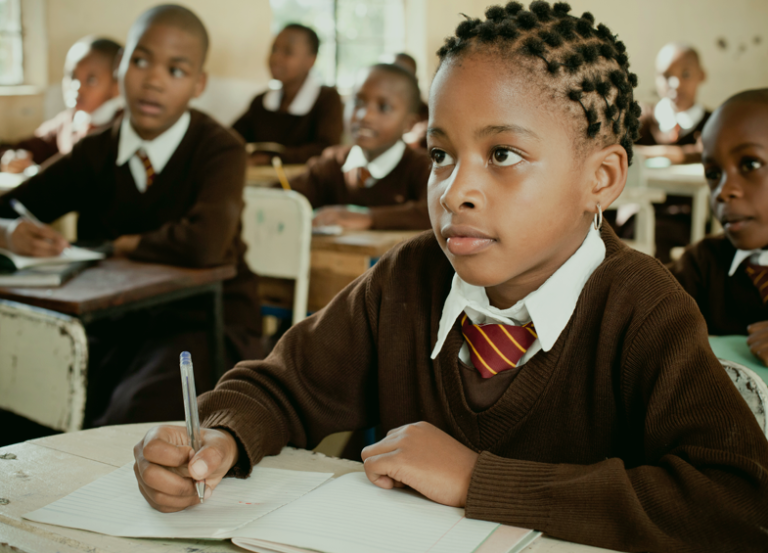
On 5th March 2026, RELI Africa convened a webinar to mark International Women’s Day and launch a baseline report mapping the education ecosystem under the Girls’ Education in RELI Programme (GERAP). The event brought together education stakeholders, partners, and network members to reflect on progress and persistent challenges in girls’ education across East Africa.
In this short piece, I share my reflections on that conversation.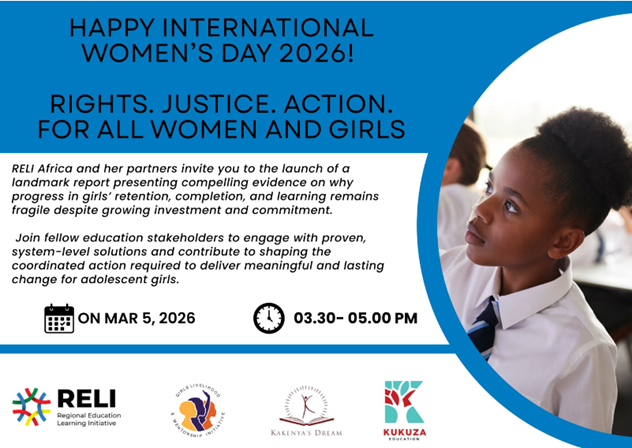
International Women’s Day traces its roots to the early 20th-century women’s labour movement, which demanded equal pay and broader rights, a struggle that continues today. This history underscores a critical lesson: investing in girls drives generational transformation. Protecting and advancing their rights requires intentional, systemic approaches.
While progress has been made, many gains have emerged through fragmented efforts, highlighting the need to move beyond siloed interventions toward integrated, collaborative action that delivers sustainable impact. At RELI Africa, this call guides our approach to girls’ education.
The Girls’ Education in RELI Africa Project (GERAP) is built on the premise that, although access to schooling has improved globally and in Africa, progression beyond primary school, quality learning outcomes, and equity remain uneven, particularly for adolescent girls facing overlapping barriers such as poverty, disability, geographical marginalization (including rural and pastoralist regions), and harmful social norms. Against this backdrop, GERAP implementing partners; the Girls’ Livelihoods and Mentorship Initiative (GLAMI), Kakenya’s Dream, and Kukuza Education; embarked on a journey to co-create a learning agenda for RELI Africa on girls’ education.
The baseline study, conducted in partnership with the Population Council Girls’ Center, sought to answer one key question: what interventions work best to address barriers to adolescent girls’ access to education in East Africa?
The evidence points to a persistent “leaky pipeline.” While gender parity in primary school enrolment is largely achieved, disparities intensify at secondary and higher levels. Dropouts exacerbated by teenage pregnancy and weak or poorly enforced re-entry policies highlight the need to measure progress beyond access, focusing on outcomes such as agency, safety, and leadership.
The study also underscores the short-term nature of many girls’ education initiatives, which, while effective at the community level, have limited scalability. Fragmented efforts mean that most organizations reach only a small fraction of girls. Moreover, although progressive policies exist across the three East African countries, they are often underfunded, poorly implemented, and disconnected from local realities. Additional gaps include limited gender-responsive pedagogy, weak enforcement of school-related gender-based violence prevention policies, and insufficient longitudinal data to track long-term impact.
Amid these challenges, opportunities for change are emerging. Participants highlighted the innovation of community-based organizations (CBOs), which, despite limited scalability, provide models for transformative local action. A pipeline approach—linking grassroots innovation, NGO evidence generation, and government institutionalization—was proposed to expand impact. Funders were called upon to provide flexible, long-term capital that supports systemic reform rather than short-term projects.
The Call to Action
The discussions underscored the need to expand RELI Africa’s girls’ education agenda, pilot shared measurement frameworks to track system-level outcomes, and advocate for alignment of national education sector plans with evidence generated by initiatives such as the baseline study. The emphasis is on co-creation, shared accountability, and embedding gender-responsive practices at scale.
In conclusion, the unfinished work in girls’ education is not about access alone. It is about ensuring progression, equity, and empowerment. Achieving true systemic change requires breaking silos, investing in long-term norm shifts, and creating accountability mechanisms that span education, health, social protection, and other sectors that intersect with adolescent development. The collective challenge is to redefine girls not as passive beneficiaries of development, but as agents of change: active participants in transforming education systems to be more responsive, inclusive, and attuned to their voices. A fully integrated, multi-sectoral education ecosystem is essential to create coherent, resilient, and sustainable impact that can be measured and scaled across East Africa.