Leaving No Child Behind Through Community-Led Action
In the dusty pathways of Adjumani District located in northern Uganda in the west Nile sub region, where refugee settlements stretch across vast landscapes and communities continue to rebuild their lives after displacement, a quiet transformation is taking place. It is not driven by new large-scale infrastructure projects. Instead, it is led by mother-to-mother committees, youth education committees, community leaders, and ordinary citizens who have chosen to make education everyone’s responsibility.
For many children living in refugee-hosting communities, the education journey is far from straightforward. Poverty, displacement, early marriage, teenage pregnancy, family responsibilities, and interrupted schooling continue to keep thousands of learners out of the classroom. Yet in Adjumani, communities are demonstrating that when local people are empowered to act, even the most persistent barriers to education can be overcome.
This was one of the most powerful lessons that emerged from a recent peer learning visit by members of the RELI Uganda Equity and Inclusion Cluster.
Discovering What Works in Adjumani
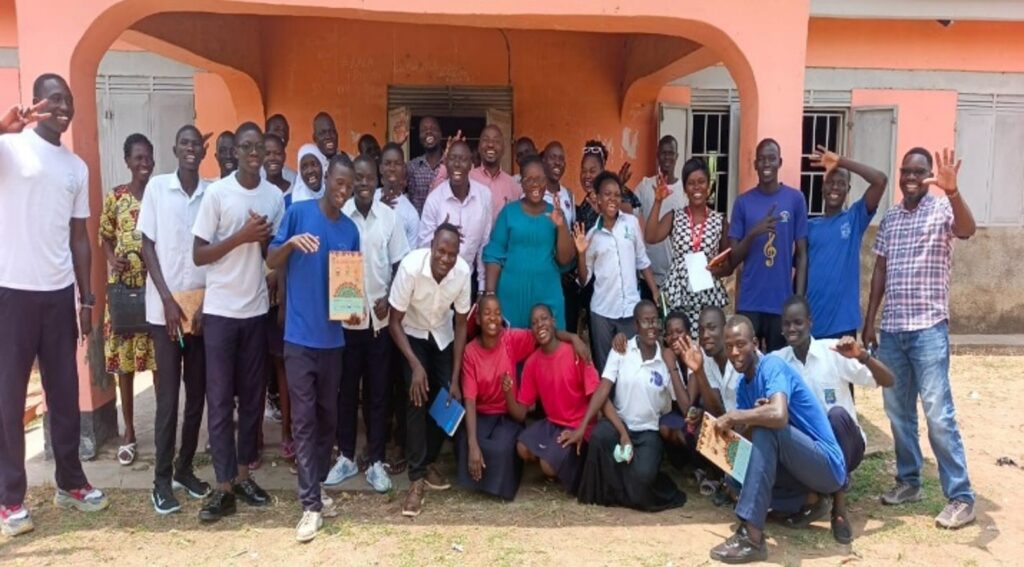
In March 2026, representatives from Community Focus International (CFI), Trailblazers Mentoring Foundation (TMF), Uganda Society for Disabled Children (USDC), Initiative for Social and Economic Rights (ISER), Building Tomorrow, and the RELI Uganda leadership team travelled to Adjumani District to learn from Accelerated Education program (AEP) initiatives supported by War Child Canada and local education stakeholders. The visit was an opportunity to listen to communities, engage with Accelerated Education program (AEP) learners, and understand how local actors are creating pathways back to learning for children who might otherwise be left behind.
Through visits to the Alere and Dzaipi settlement Accelerated Education Programme (AEP) Centres, participants witnessed how alternative learning opportunities are helping over-age refuge learners, school dropouts, and young mothers reclaim their right to education.
What stood out most, was not simply the learning centres themselves—it was the network of community structures working tirelessly behind the scenes to ensure learners succeed.
When Communities Become the Safety Net
One recurring message echoed throughout the visit: education works best when communities own it. In Adjumani, community members are not passive beneficiaries of education programmes. They are active partners and champions of children’s learning. This is perhaps most visible through the Mother-to-Mother Committees.
These groups of women have become powerful advocates for girls’ education. Through home visits, and peer support networks, they encourage girls to stay in school, support young mothers returning to learning, and challenge social norms that often push girls out of education. Their impact is perhaps best captured through the words of one young mother attending an Accelerated Education Centre who said:
“If it was not for Mother-to-Mother Committee members, I would have dropped out of school a long time ago because of the responsibilities I have towards my baby, but they have continuously advised me to remain at school”
Behind every learner who returns to school is often a community member who refused to give up on them.
The Power of Partnership: Government Leadership at the Centre
Sustainable educational inclusion in Adjumani is rooted in strong collaboration between communities, civil society organizations, and government institutions. The progress observed in the Accelerated Education Programme centres reflects collective effort rather than isolated action, with multiple stakeholders working toward a shared goal of ensuring that every child accesses learning opportunities.
The Office of the Prime Minister (OPM) plays a key coordination role in refugee response, while the District Education Department provides leadership, oversight, and technical guidance to align interventions with national education priorities. School leaders, teachers, and local leaders further strengthen enrolment, retention, and transition by working closely with communities to address barriers to learning.
The Adjumani experience shows that meaningful change happens when government systems and community structures work in partnership. While communities provide frontline support to learners, government institutions ensure coordination, quality assurance, and long-term sustainability. This model highlights a key lesson for education systems across Africa: lasting impact is achieved when community action is matched with strong government leadership and ownership.
Young People Leading the Change
Equally inspiring was the role played by Youth Education Committees made up of young people from both refugee and host communities. These committees identify out-of-school children, encouraging school re-entry, conducting community sensitization, and serving as positive role models. In many ways, they are changing perceptions of what young people can contribute to their communities. One youth committee member reflected:
“I have now learnt how to speak in public, which was not the case before.”
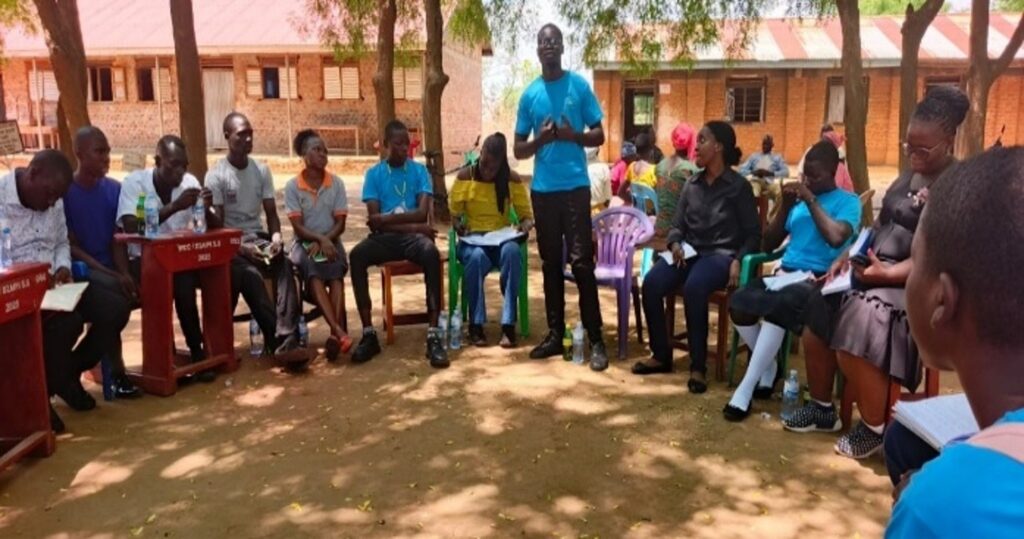
While supporting education for others, these youths are simultaneously building their own leadership, communication, and life skills—creating a new generation of community change-makers.
Education Beyond the Classroom
The visit also highlighted the critical role played by Community Education Committees (CEC). These volunteer-led structures regularly visit homes, track attendance, support vulnerable learners, mediate challenges, and strengthen relationships between schools and families.
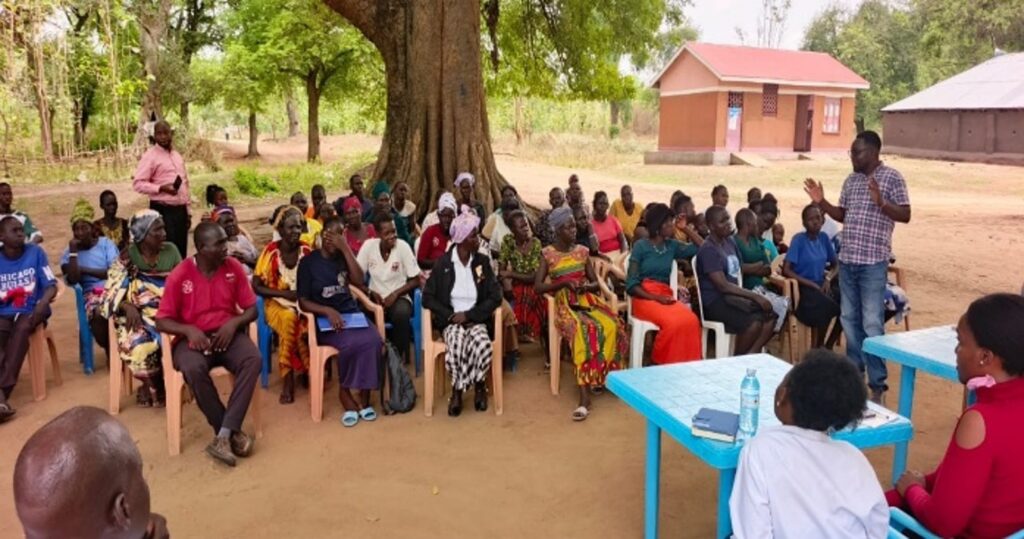
CEC members explaining their community-based work.
Their work reflects an important reality: many of the factors that influence learning occur outside the classroom.
A child struggling with family responsibilities, trauma, stigma, or poverty cannot be supported by teachers alone. Sustainable solutions require the involvement of families, communities, and local leaders.
The Adjumani experience demonstrates that educational inclusion is not simply about providing access to learning spaces. It is about creating a supportive ecosystem around every learner.
Lessons for the Wider Education Sector
While the context of Adjumani is unique, the lessons emerging from these community-led initiatives have relevance far beyond refugee settlements.
- First, communities are not merely beneficiaries of education programmes—they are powerful agents of change.
- Second, education interventions are most effective when they respond to learners lived realities, including their social, emotional, and economic circumstances.
- Third, early identification and support of at-risk learners can prevent dropout before it occurs
- Finally, meaningful educational inclusion requires collective action. Schools cannot do it alone.
The Work Is Not Finished
Despite the encouraging progress, significant challenges remain. Economic hardship continues to force some children into income-generating activities. Child-headed households struggle with caregiving responsibilities. Cultural barriers still affect girls’ participation in education. Long distances to learning centres remain a challenge for many learners.
These realities remind us that improving educational outcomes requires sustained investment, collaboration, and commitment.
Yet what Adjumani demonstrates is that solutions already exist within communities themselves.
A Model Worth Scaling
As governments, civil society organizations, and development partners search for effective ways to improve educational inclusion, Adjumani offers an important lesson.
The most sustainable solutions are often those that place communities at the centre.
By empowering mothers, mobilizing youth, strengthening local education committees, and creating alternative learning pathways for vulnerable learners, communities are proving that educational transformation is possible—even in some of the most challenging circumstances.
The question is no longer whether community-led approaches work.
The evidence from Adjumani suggests they do.
The challenge now is ensuring that these approaches are strengthened, sustained, and scaled so that every child—regardless of where they live or the circumstances, they face—has an opportunity to learn, thrive, and build a better future.
Because when communities take ownership of education, no child is left behind.
Author: Solomon Sebule (Country Coordinator, RELI Uganda)